

CytO|Learn
AI workforce integration
About
AI is in every workplace now. Training rarely is.
That gap is where things go wrong — hallucinated citations, HIPAA exposure, wasted licenses, hours lost to tools no one really learned. It is also where the upside lives. Trained teams produce measurable results in the workflows that matter most.
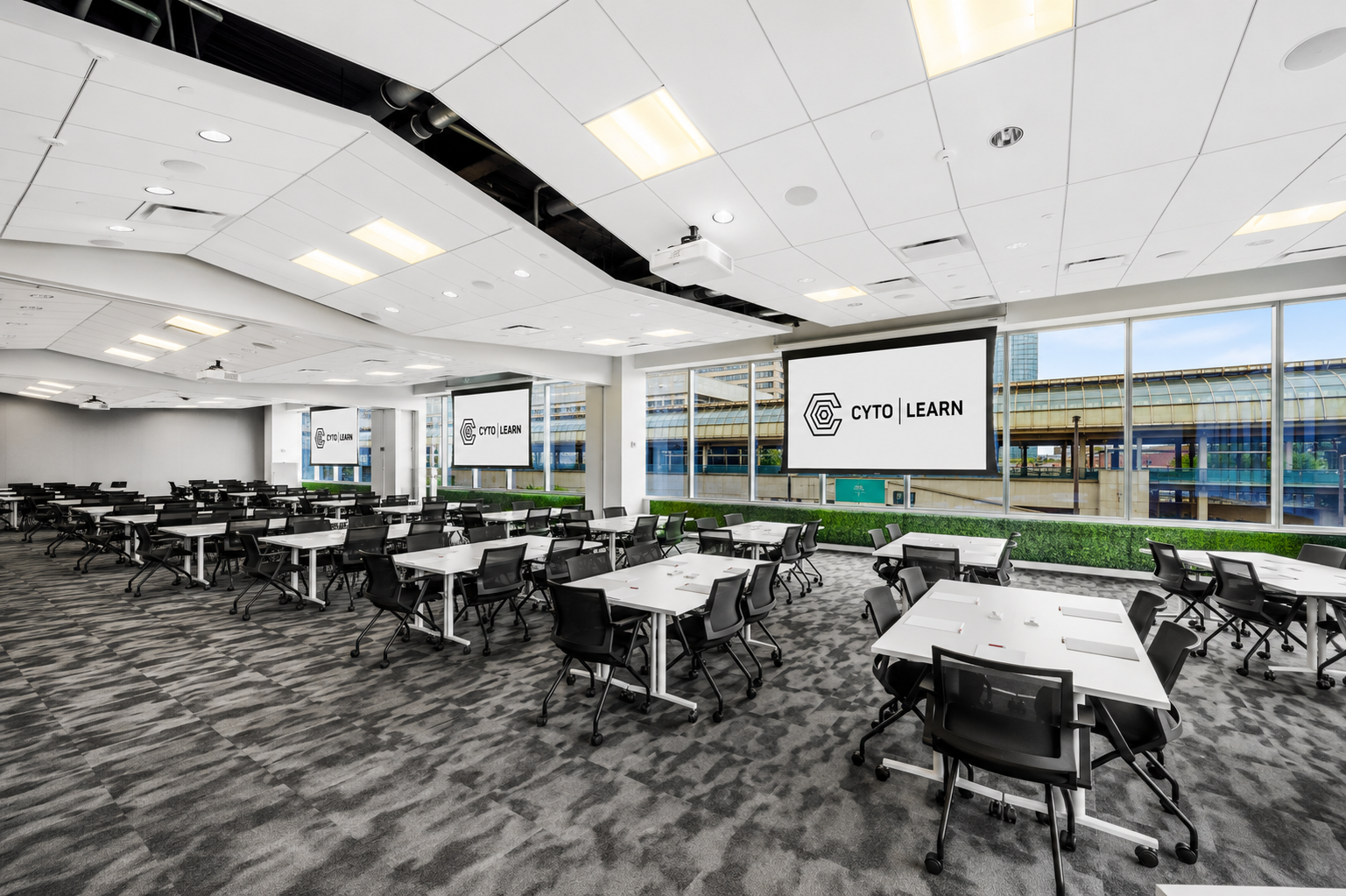
We built CYTO|LEARN to close that gap. We deliver in-person training, structured peer networking, and accredited continuing education from our home at the Cira Centre in Center City Philadelphia.
Programs
Enroll in one of our predesigned courses, or have one of our industry-professional staff tailor their curriculum specifically to your needs
-
For every working professional across departments: Employee Resource Groups, leadership groups, and operating teams.
Platform-specific courses on using Claude, Copilot, Gemini, or OpenAI responsibly. Prompting for productivity, workflow redesign, verification habits, and change management for AI rollouts. Designed to give any team — finance, operations, marketing, HR, sales, leadership — the practical literacy to use AI tools well, safely, and measurably.
Why it matters: MIT's NANDA initiative found that the vast majority of enterprise AI pilots fail to produce measurable financial impact — not because of the technology, but because of a workforce-learning gap. The Boston Consulting Group estimates 70% of AI success comes from the people-and-process layer.
-
For attorneys, paralegals, and legal administrators.
Programming maps to ABA Formal Opinion 512 on AI competence and to the synchronous CLE requirements that every PA attorney must satisfy each year. Practice-area workflows for litigation, M&A, contracts, IP, and real estate. Includes hallucination-prevention discipline, verification checklists, and prompt libraries lawyers actually use. Pennsylvania CLE accreditation in progress.
Why it matters: ABA's 2024 Tech Survey found lawyer AI adoption tripled in one year, growing from 11% in 2023 to 30% in 2024, with 46% adoption at firms of 100+. Most of those lawyers were never trained on how to use AI in the field.
-
For clinicians, nursing leadership, healthcare administrators, and revenue-cycle teams.
Clinical content covering ambient documentation, AI-assisted decision support, and evaluation of AI tools by physicians and nursing leadership — delivered through accredited joint-providership for AMA PRA Category 1 CME credit. Administrative content covering HIPAA-aligned AI workforce practices, vendor BAA requirements, and AI in revenue cycle management (prior authorization, claim-denial prediction, autonomous coding).
Why it matters: 92% of physicians say they want more AI training (AMA, 2026 Physician Survey on Augmented Intelligence). Penn Medicine, Jefferson, Temple, and CHOP are extending clinical AI to nurses, admins, and operations — and the workforce-training requirement extends with it.
-
Looking for AI training in a field not listed above? Tell us your goals, and we will help you achieve them.
Frequently Asked Questions
-
Pennsylvania CLE provider accreditation is in progress, with reciprocity for New Jersey, New York, and Delaware to follow. Healthcare CME-credit programming is delivered through accredited joint-providership. Foundations programming does not require accreditation and is suitable for general professional development.
-
Yes. While CYTO|LEARN is designed around the Cira Centre venue, our instructor team can deliver on-site at your office, system, or campus for organization-specific engagements. Many clients combine an on-site session with one or more sessions at our venue.
-
Sample pricing is shared upon request. Email learn@cytophl.com
-
Most custom engagements move from first conversation to first class within four to eight weeks. Open briefings are bookable as soon as the next available session.
-
No. CYTO|LEARN is intentionally vendor-neutral. We teach your team to use the tools you have available — Claude, ChatGPT, Harvey, CoCounsel, Spellbook, Microsoft Copilot, Enterprise, clinical AI platforms — without favoring any of them. Sponsorships, when present, are clearly disclosed and never shape curriculum.